
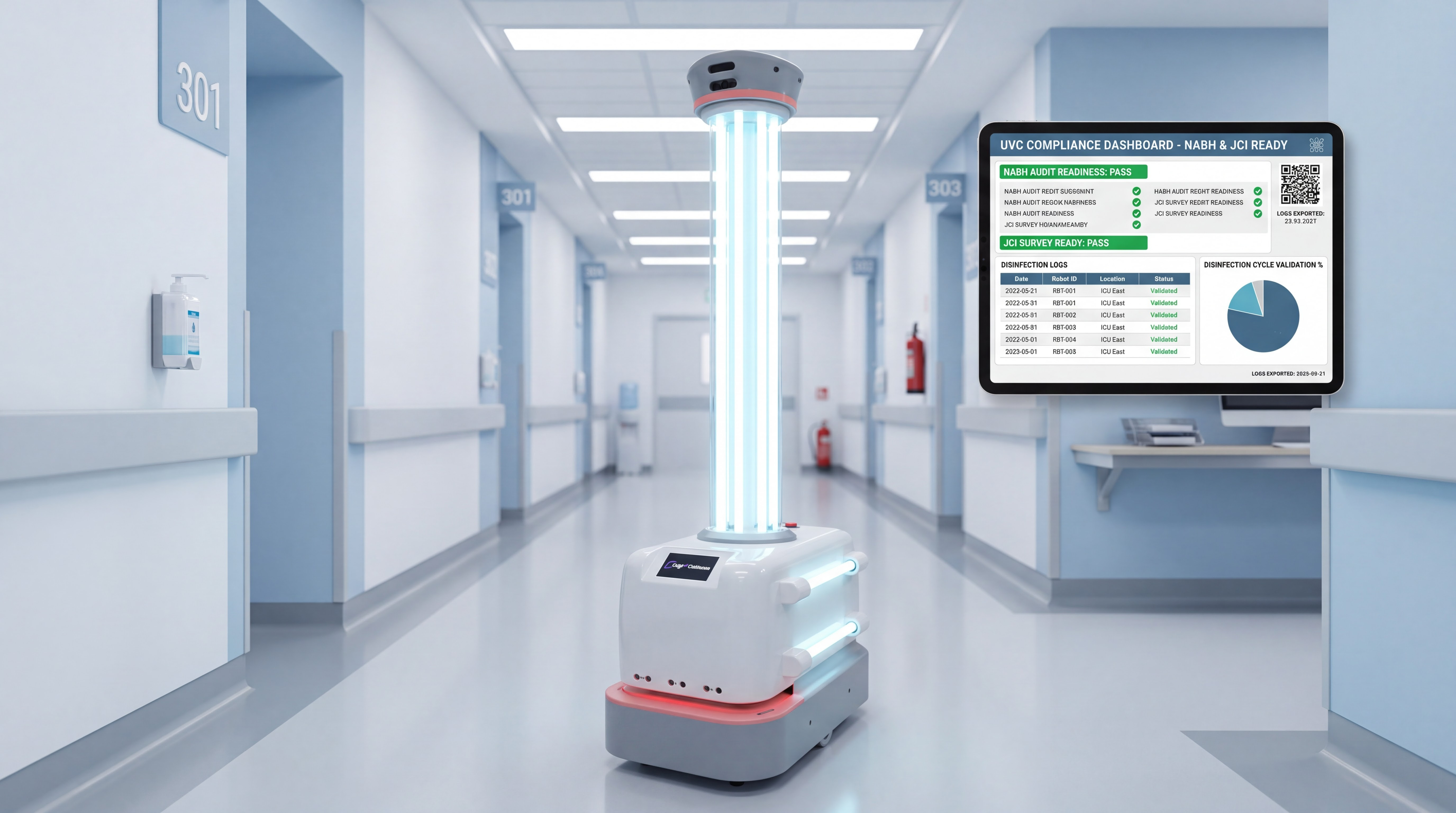
When a NABH assessor or JCI surveyor asks how environmental disinfection was performed in a vacated room, verbal assurance is not enough. Quality and infection-prevention teams need a defensible record: what was done, where, when, under which protocol—and who stands behind it.
For the wider evidence chain—policy, schedule, verification, and corrective action—see NABH infection control documentation. For why paper registers fail and what a digital room-hygiene record requires, see digital disinfection records hospital teams can defend.
Hospitals already invest in terminal cleaning, checklists, and staff training. UV-C disinfection is increasingly used as a secondary layer after manual cleaning in unoccupied spaces. The accreditation question is rarely “Do you own a UV device?†It is “Can you show consistent, reviewable evidence that the intended process ran as governed?â€
This article explains what that evidence typically looks like for NABH documentation practice and JCI-aligned IPC architecture—and how timestamped, signed cycle reports strengthen the infection-control file. Spotbot by SpotlessAI can generate structured cycle logs that support those programmes; it does not replace NABH or JCI accreditation pathways or on-site validation.
Why Paper Checklists Alone Fall Short
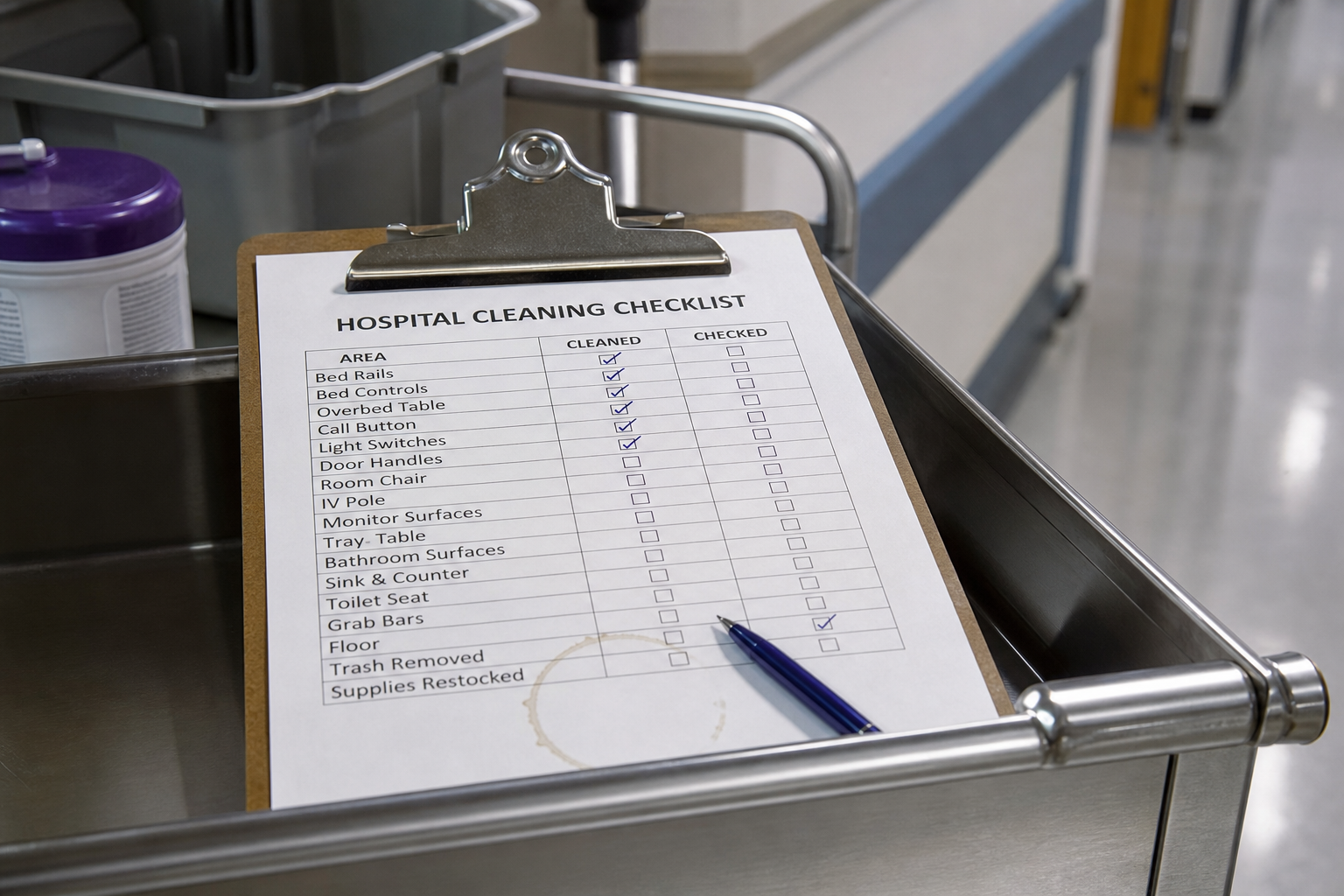
Paper cleaning checklists remain useful for day-to-day accountability. They confirm that someone intended to complete a task. Assessors and surveyors, however, often probe for more than a tick mark:
- Which exact room or bay was treated?
- When did the cycle start and end?
- Was the room vacant and cleared for UV-C?
- What protocol or SOP version applied?
- Was coverage and dose consistent with the intended cycle?
- Who reviewed and signed the record into the IPC file?
Without those fields, a checklist can look complete while remaining difficult to defend under scrutiny—especially across night shifts, surge periods, and multi-ward rollout.
Assessor lens
Evidence beats anecdote. Process records that connect room identity, timestamps, and accountable review are easier to discuss in NABH and JCI interviews than informal verbal walkthroughs alone.
What Defensible UV Disinfection Evidence Looks Like
A survey-ready environmental disinfection record typically combines machine-generated facts with human accountability. For UV-C cycles used after terminal cleaning in vacated rooms, hospitals often look for:
- Room identification — ward, room or bay ID matching the facility’s naming conventions
- Timestamps — start and end times that prove when the cycle ran
- Duration and coverage indicators — evidence the intended cycle completed
- UV-C dose indicators — dose or per-zone dose data where the platform provides them
- Protocol linkage — reference to the hospital SOP that authorized the cycle
- Accountable signature — operator or IPC/EVS review sign-off before the record is archived
“Signed†here means accountable human attestation attached to the timestamped cycle report—not a claim of cryptographic legal e-signature certification. Hospitals define who may sign and how records are retained.
NABH Angle: Documentation That Strengthens the IPC File
NABH assessments place heavy weight on documented infection-control practice, continuous quality improvement, and the ability to retrieve records that show what the hospital actually does—not only what policy manuals describe.
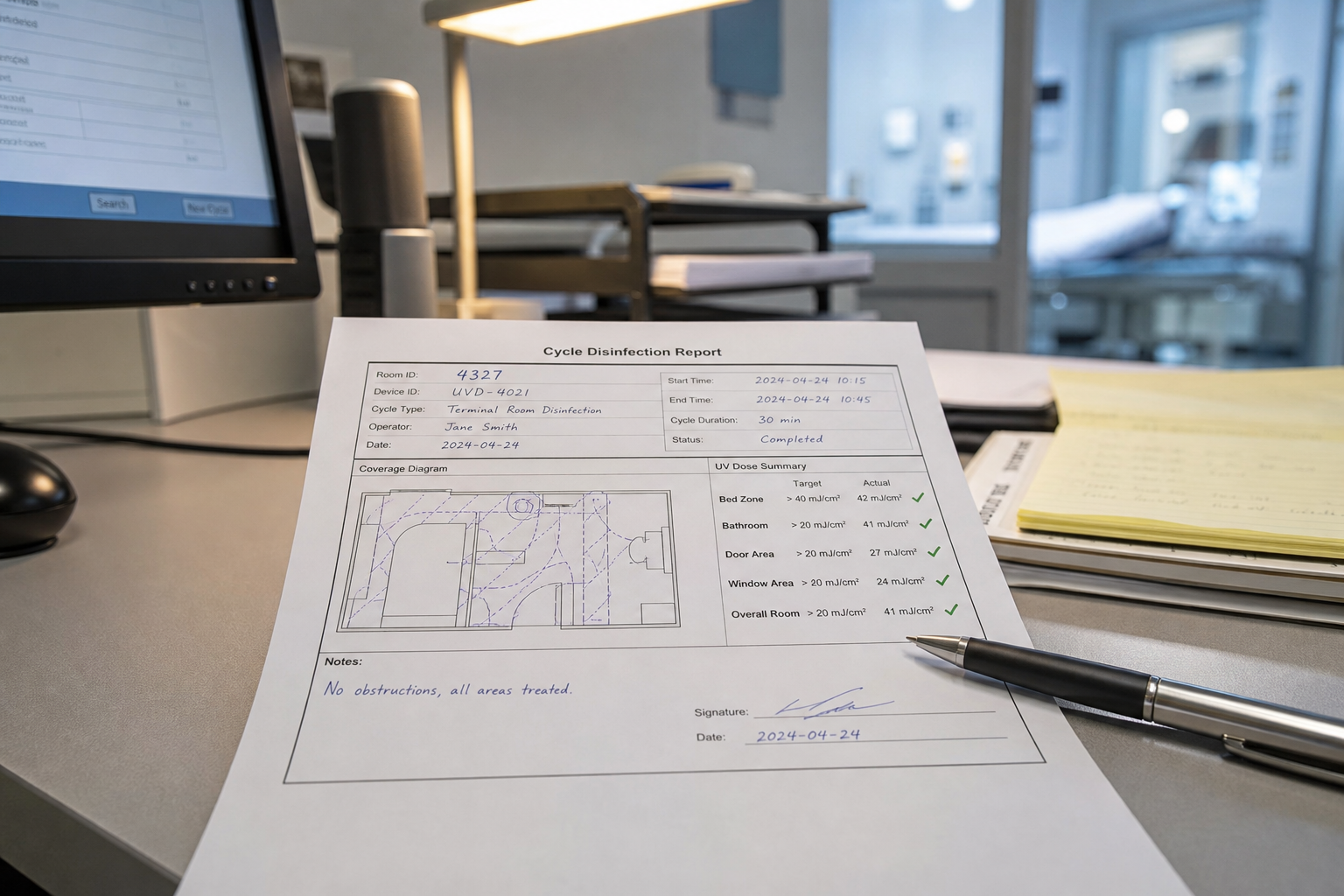
Structured UV-C cycle reports—room ID, timestamps, coverage map or coverage data, UV-C dose per zone, and duration—help infection-control and quality teams strengthen environmental hygiene documentation. When those reports are reviewed, signed, and archived alongside terminal-cleaning records, assessors can follow a clearer trail from SOP to execution.
Important boundary: cycle logs support NABH documentation practice. They do not replace accreditation requirements, hospital SOPs, or on-site validation. Spotbot is an adjunct to cleaning and IPC protocols.

Documentation tip
File UV cycle reports with the same retention discipline you apply to other IPC evidence: consistent naming, date order, and a clear owner for retrieval during assessment week.
JCI Angle: Protocol-Driven, Survey-Ready Practice
JCI survey conversations often test whether infection-prevention goals are translated into repeatable, protocol-driven practice. Shift-to-shift variability is a common risk: the same room type treated differently depending on who is on duty.
A governed UV-C secondary disinfection cycle—after terminal cleaning, only in vacated spaces, with a logged outcome—reduces some of that variability. Surveyors can see that the hospital defined eligibility rules, safety clearances, and a reviewable trail rather than relying on ad hoc verbal practice.
Again, the claim must stay precise: protocol-driven UV cycles support JCI-aligned IPC architecture as an adjunct to hospital cleaning SOPs. They do not replace accreditation processes or demonstrate that every JCI standard is met.

How UV-C Fits the Accreditation Workflow
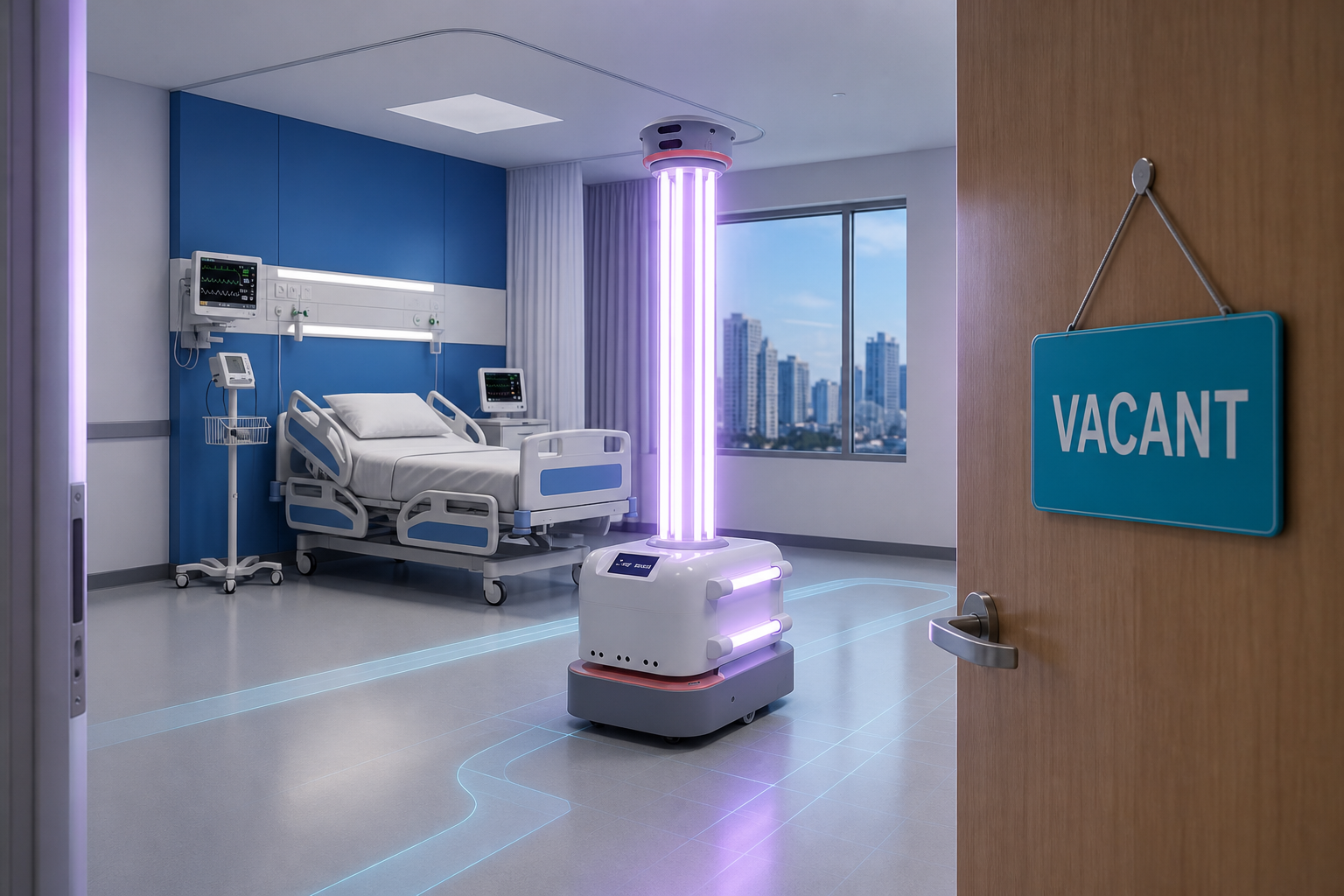
UV-C belongs after—not instead of—manual terminal cleaning. A practical hospital sequence that quality teams can explain to assessors and surveyors looks like this:
- Terminal clean — environmental services completes the hospital’s cleaning SOP.
- Room vacated — the space is confirmed empty; safety clearances for UV-C are met.
- Spotbot cycle — a controlled UV-C secondary disinfection cycle runs under protocol.
- Report archived — the structured cycle report is reviewed, signed, and filed with IPC documentation.
This framing keeps expectations honest: people and primary cleaning remain essential; automation adds consistency and a machine-readable trail for continuous improvement and external assessment.
Safety reminder
UV-C disinfection platforms such as Spotbot are intended for unoccupied rooms only, following hospital safety procedures and product guidance. Occupancy detection and local policy still govern every cycle.
Building the Record Hospitals Can Defend
Defensible evidence is a system, not a single PDF. Hospitals that prepare well usually connect three layers:
- Machine log — room ID, timestamps, coverage, UV-C dose indicators, duration
- SOP linkage — the report sits under a written protocol that defines when UV runs
- Signed review and archive — an accountable person attests the cycle completed as intended and files the record
IPC and quality teams then decide retention periods, who may retrieve records during assessment week, and how exceptions (aborted cycles, room re-entry) are documented. That governance is what turns raw device output into accreditation-usable evidence.
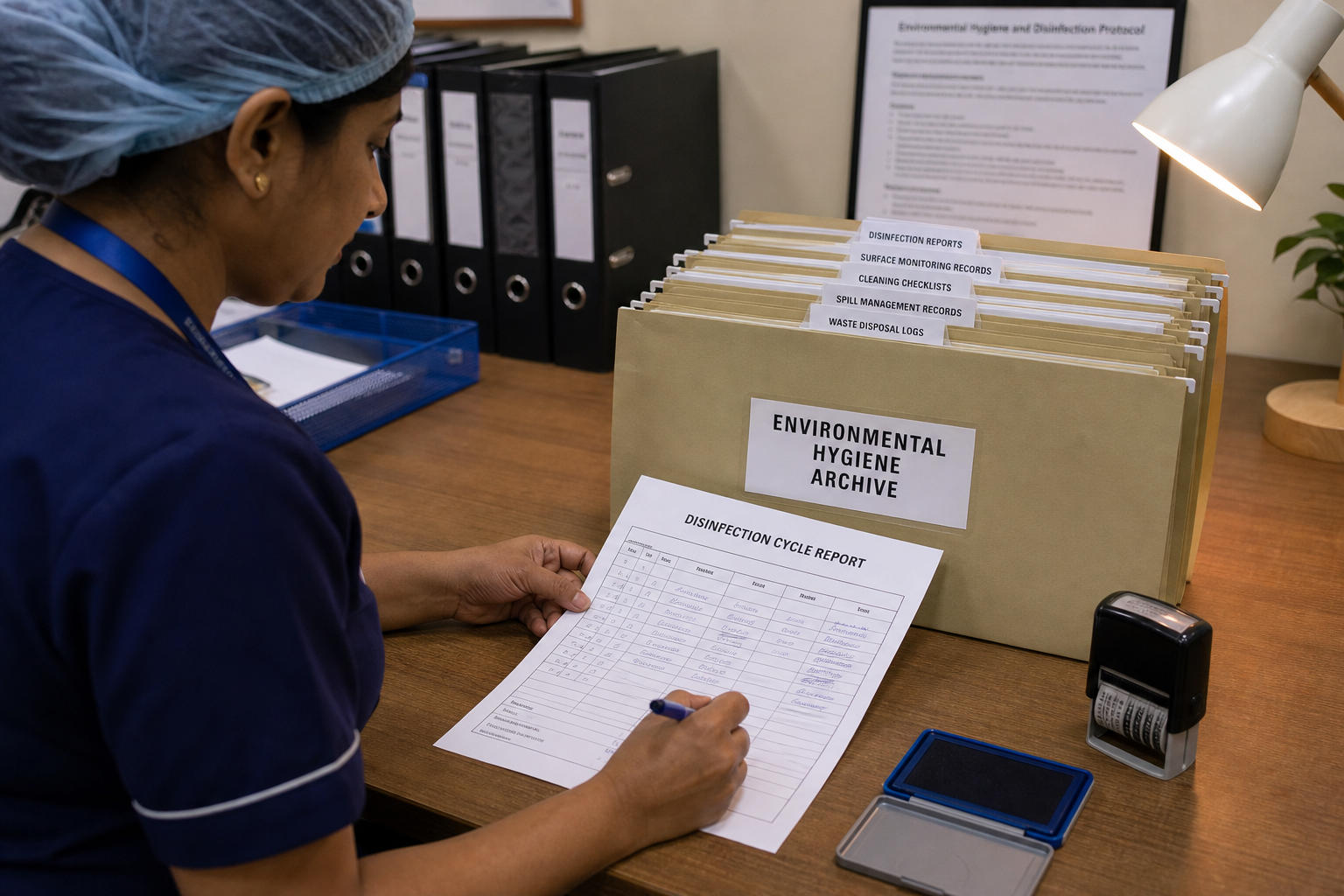
How Spotbot Supports Audit-Ready Cycle Reports
Spotbot Lite by SpotlessAI is designed to support hospital environmental disinfection after routine manual cleaning in unoccupied rooms. Each completed cycle can produce a structured report—room identification, start and end times, coverage information, UV-C dose indicators, and duration—so IPC and quality teams can strengthen documentation for continuous improvement and hospital accreditation audits.
Use those reports alongside existing SOPs. Spotbot supports your programme; it does not replace NABH or JCI accreditation pathways. For the accreditation landing page, see NABH & JCI evidence, or review the broader healthcare framework.
Intended use
Spotbot supports environmental disinfection in unoccupied rooms after routine manual cleaning and in line with hospital safety procedures. Always follow local protocols and product guidance.
Key Takeaways
- NABH assessors and JCI surveyors look for defensible process evidence—not only verbal assurance that UV disinfection occurred.
- Strong records typically include room ID, timestamps, coverage/dose indicators, duration, SOP linkage, and accountable human sign-off.
- NABH-oriented teams use structured cycle reports to strengthen environmental hygiene documentation and CQI files.
- JCI-aligned practice benefits from protocol-driven, repeatable secondary disinfection that reduces shift-to-shift variability.
- UV-C is an adjunct after terminal cleaning in vacated rooms; it does not replace cleaning, accreditation pathways, or on-site validation.
- Spotbot cycle reports can support IPC and quality documentation when hospitals govern review, signature, and archive discipline.
Frequently Asked Questions
Does a UV cycle report replace NABH or JCI accreditation?
No. Cycle reports support environmental hygiene documentation. They do not replace NABH or JCI accreditation pathways, hospital SOPs, or on-site validation by assessors and surveyors.
What fields should a UV disinfection evidence record include?
Useful fields typically include room identification, start and end timestamps, duration, coverage information, UV-C dose indicators where available, protocol or SOP reference, completion status, and accountable human sign-off before archiving.
How does NABH evidence differ from JCI evidence for UV disinfection?
Both frameworks value documented, repeatable IPC practice. NABH conversations often emphasize documentation and continuous quality improvement records. JCI conversations often test protocol-driven consistency and survey-ready process trails. The same structured cycle report can support both when governed under hospital SOPs.
What does “signed†mean on a disinfection record?
In this context, signed means an accountable operator, EVS lead, or IPC reviewer attests that the cycle completed as intended and that the record may be filed. It is human attestation attached to a timestamped machine report—not a claim of certified legal e-signature unless your hospital’s system separately provides that.
Can UV robots be used in occupied patient rooms for accreditation evidence?
Spotbot is designed for unoccupied rooms after routine manual cleaning, following hospital safety procedures. Occupied-room use is outside intended operation and should not be presented as part of the evidence pathway.
Where does UV-C sit in the room-ready sequence?
After terminal cleaning and after the room is vacated and cleared for UV-C. The cycle report is then reviewed, signed, and archived to the IPC file.
How can our hospital learn more about Spotbot audit reports?
Review the SpotlessAI healthcare page for NABH and JCI-aligned workflow context, explore Spotbot Lite, or book a demo to discuss how cycle reports may fit your IPC documentation practice.
Conclusion
Accreditation conversations reward clarity: a vacated room, a governed UV-C cycle after cleaning, and a signed, timestamped record that quality teams can retrieve. That combination is far easier to defend than a checklist tick or a verbal assurance alone.
NABH and JCI do not ask hospitals to buy a particular robot. They ask hospitals to demonstrate disciplined infection-prevention practice. Structured UV cycle reports—room ID, timestamps, coverage and dose indicators, duration, and accountable sign-off—help IPC and quality teams show that discipline when UV is part of the programme.
Spotbot Lite by SpotlessAI is built to support that documentation layer as an adjunct to hospital cleaning and safety protocols. To explore fit with your facility’s accreditation workflow, review the healthcare framework, explore Spotbot Lite, or speak with the SpotlessAI team.