
Audit-ready UV disinfection evidence
Defensible, signed, timestamped records NABH assessors and JCI surveyors can review
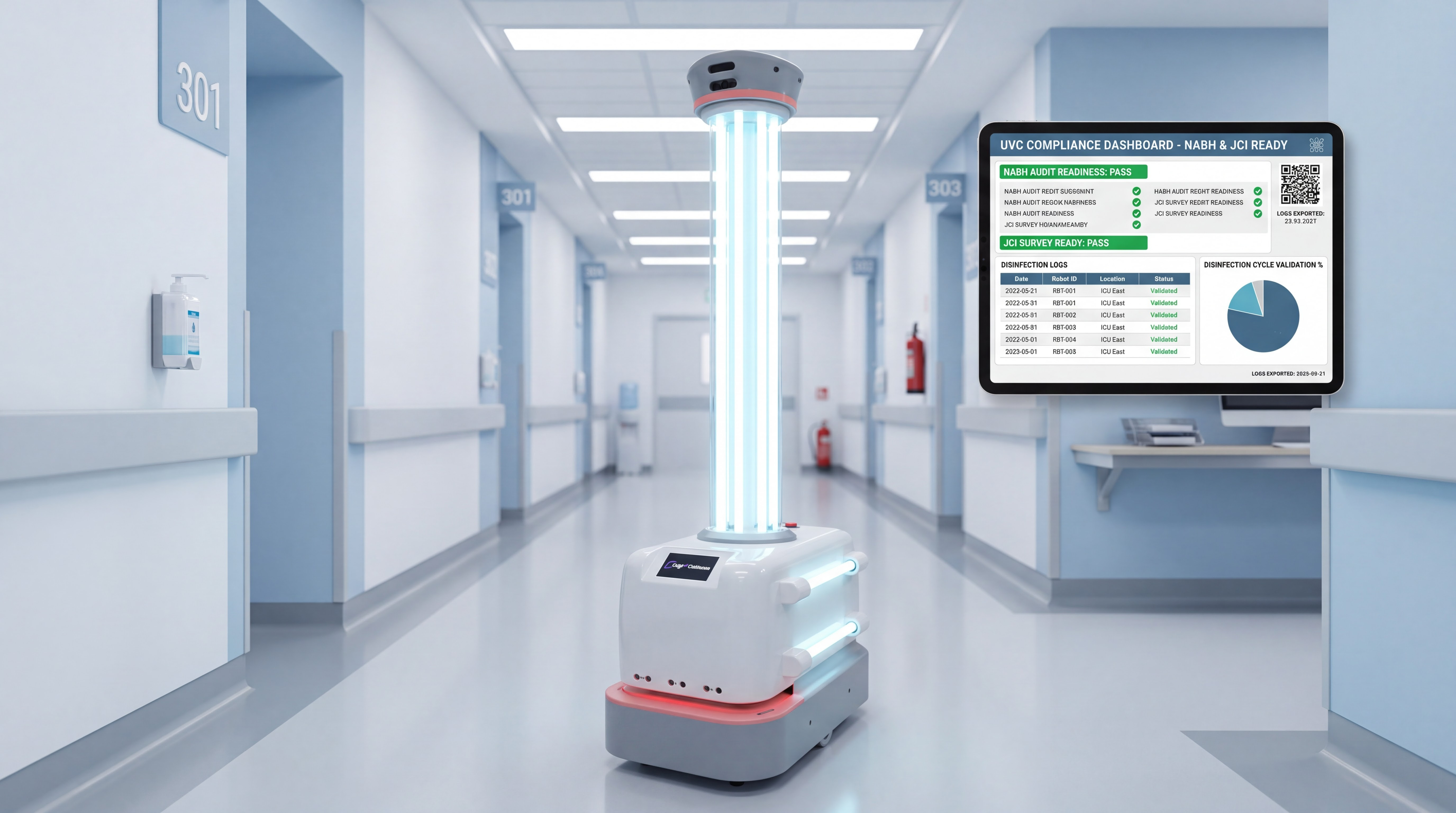
Spotbot supports environmental hygiene documentation after terminal cleaning in unoccupied rooms—with structured cycle reports that strengthen your IPC file. Spotbot does not replace NABH or JCI accreditation pathways.
Why verbal assurance is not enough
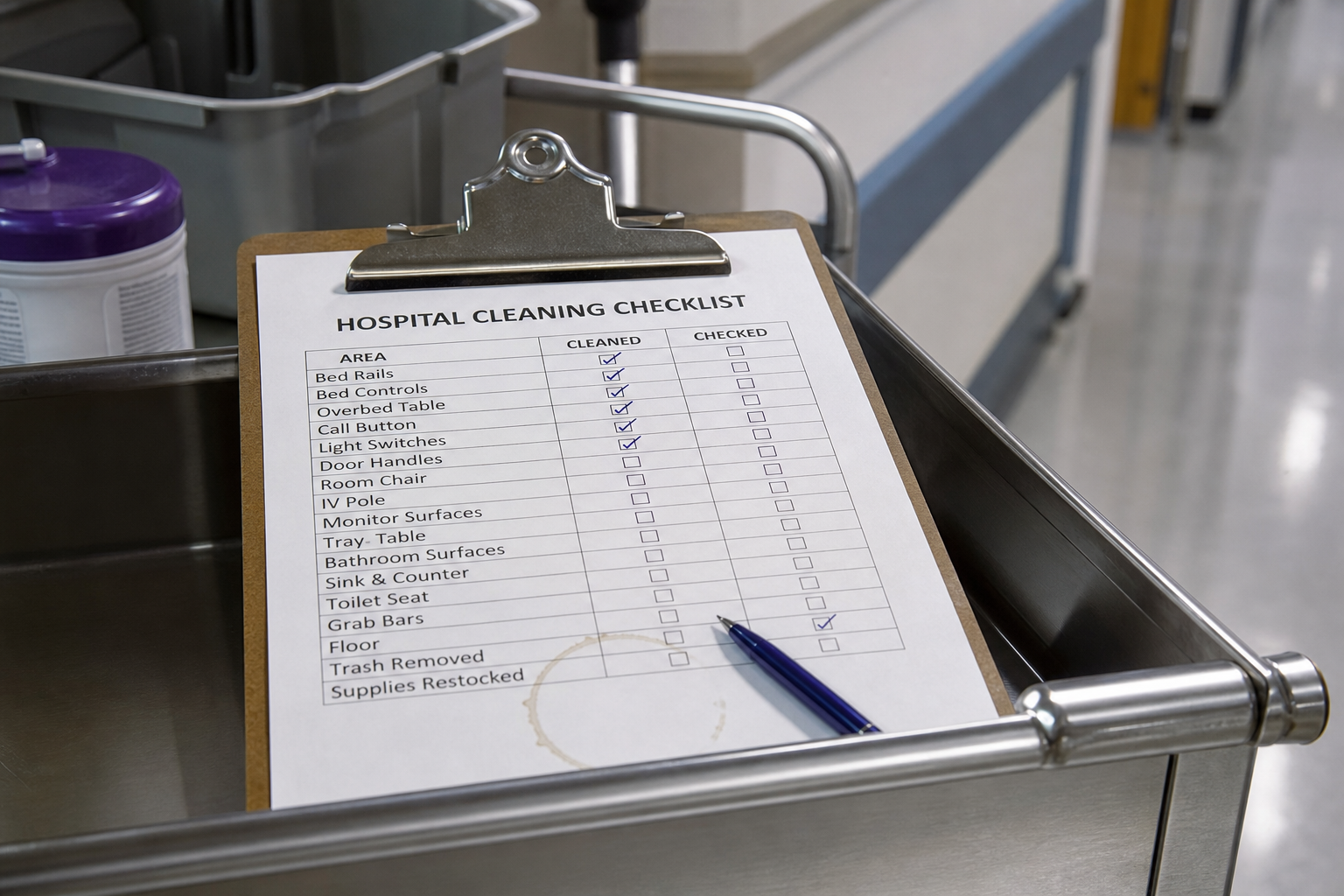
When an assessor or surveyor asks how environmental disinfection was performed in a vacated room, a tick on a checklist or a verbal walkthrough often falls short. Quality and infection-prevention teams need a retrievable process record.
Paper checklists confirm intent. Accreditation conversations usually probe for more: which room, when the cycle ran, which protocol applied, and who stands behind the record.
- Evidence beats anecdote in NABH and JCI interviews
- Shift-to-shift variability is harder to defend without logs
- Signed, timestamped records sit cleanly in the IPC archive
What defensible UV evidence looks like
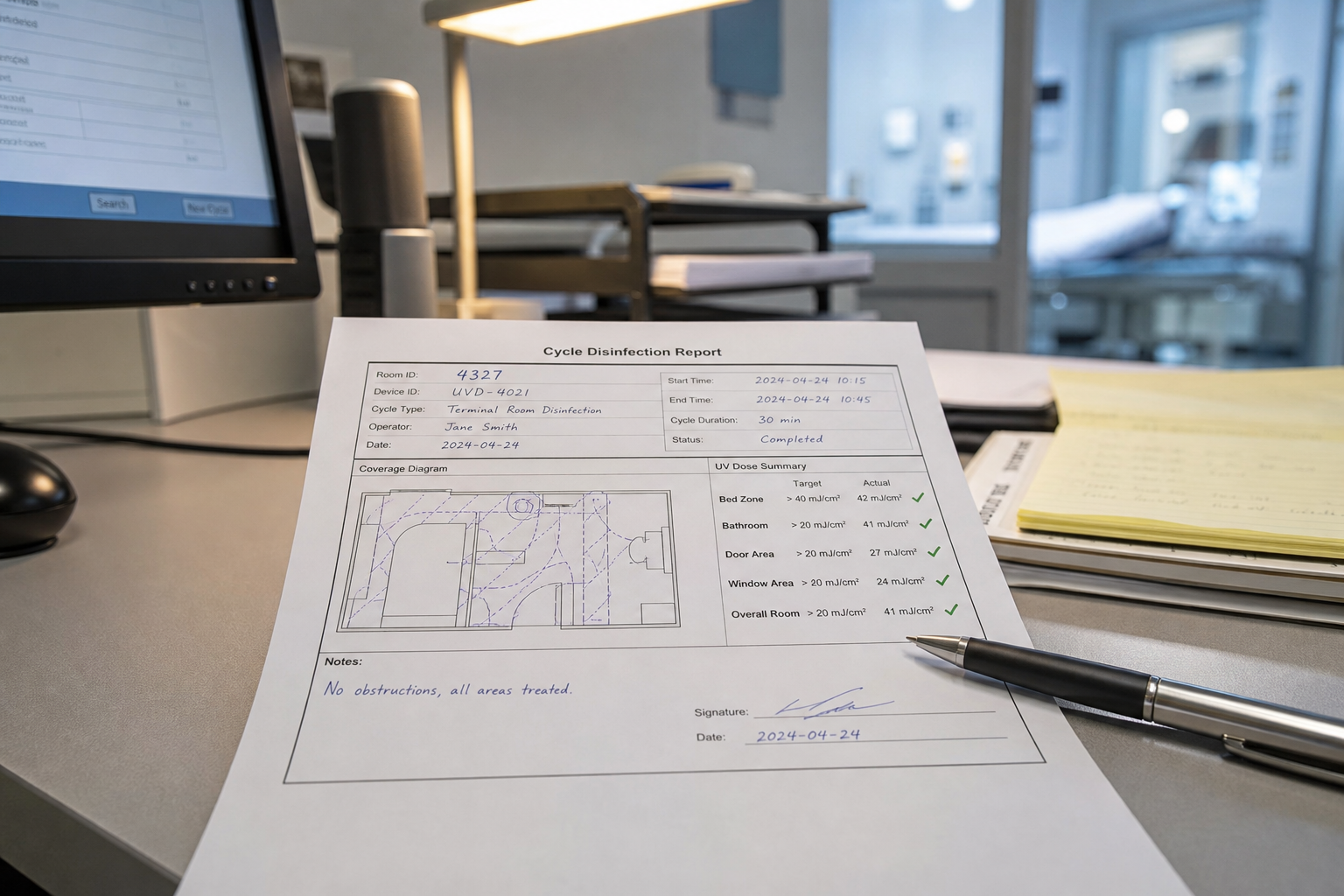
A survey-ready environmental disinfection record typically combines machine-generated facts with accountable human review.
- Room identification — ward, room, or bay ID matching facility naming
- Timestamps — start and end times that prove when the cycle ran
- Duration & coverage — indicators the intended cycle completed
- UV-C dose indicators — dose or per-zone data where the platform provides them
- Protocol linkage — reference to the SOP that authorized the cycle
- Accountable signature — operator or IPC/EVS review before archive
“Signed” means accountable human attestation attached to a timestamped cycle report—not a claim of certified legal e-signature unless your hospital system separately provides that.

Documentation that strengthens the IPC file
NABH assessments place weight on documented infection-control practice, continuous quality improvement, and the ability to retrieve records that show what the hospital actually does—not only what policy manuals describe.
Structured UV-C cycle reports—room ID, timestamps, coverage data, UV-C dose indicators, and duration—help infection-control and quality teams strengthen environmental hygiene documentation. When those reports are reviewed, signed, and archived alongside terminal-cleaning records, assessors can follow a clearer trail from SOP to execution.
- Supports continuous quality improvement documentation
- Fits alongside existing environmental hygiene SOPs
- Does not replace NABH requirements or on-site validation
Protocol-driven, survey-ready practice
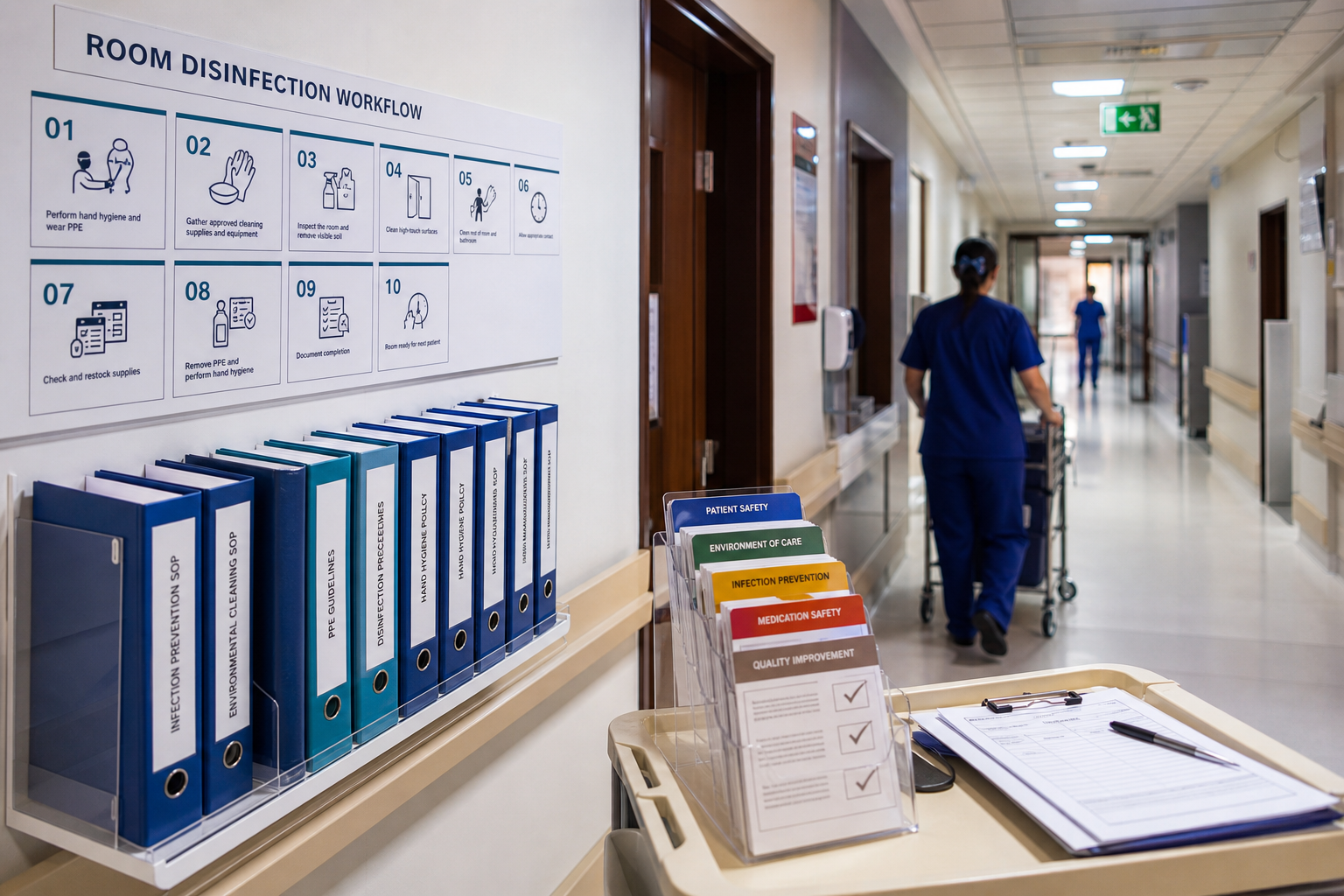
JCI survey conversations often test whether infection-prevention goals translate into repeatable, protocol-driven practice. Shift-to-shift variability is a common risk: the same room type treated differently depending on who is on duty.
A governed UV-C secondary disinfection cycle—after terminal cleaning, only in vacated spaces, with a logged outcome—reduces some of that variability. Surveyors can see that the hospital defined eligibility rules, safety clearances, and a reviewable trail rather than relying on ad hoc verbal practice.
- Supports JCI-aligned IPC architecture as an adjunct to cleaning SOPs
- Encodes a repeatable secondary disinfection step
- Does not replace JCI accreditation processes
How UV-C fits the accreditation workflow
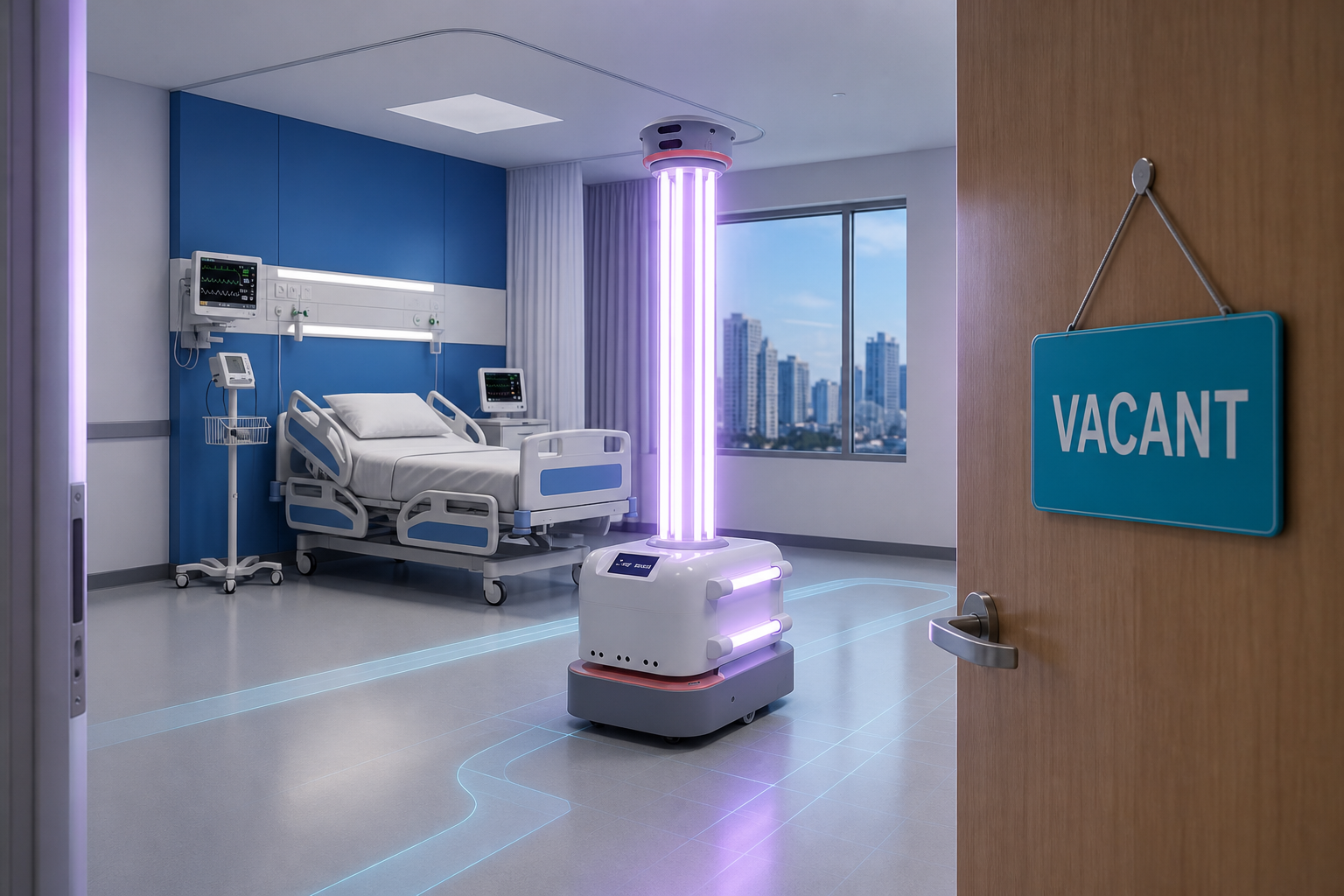
Place Spotbot after terminal cleaning in vacated spaces. Staff oversee the process; the robot delivers a consistent UV-C dose and an audit log your quality team can file.
UV-C belongs after—not instead of—manual terminal cleaning. The sequence below is what IPC and quality teams can explain clearly to assessors and surveyors.
- 1 Terminal clean
- 2 Room vacated
- 3 Spotbot cycle
- 4 Report archived to IPC file
Spotbot is an adjunct to hospital cleaning and infection-control protocols; it does not replace accreditation requirements or on-site validation. Operate only in unoccupied rooms following hospital safety procedures.
Cycle reports IPC and quality teams can file
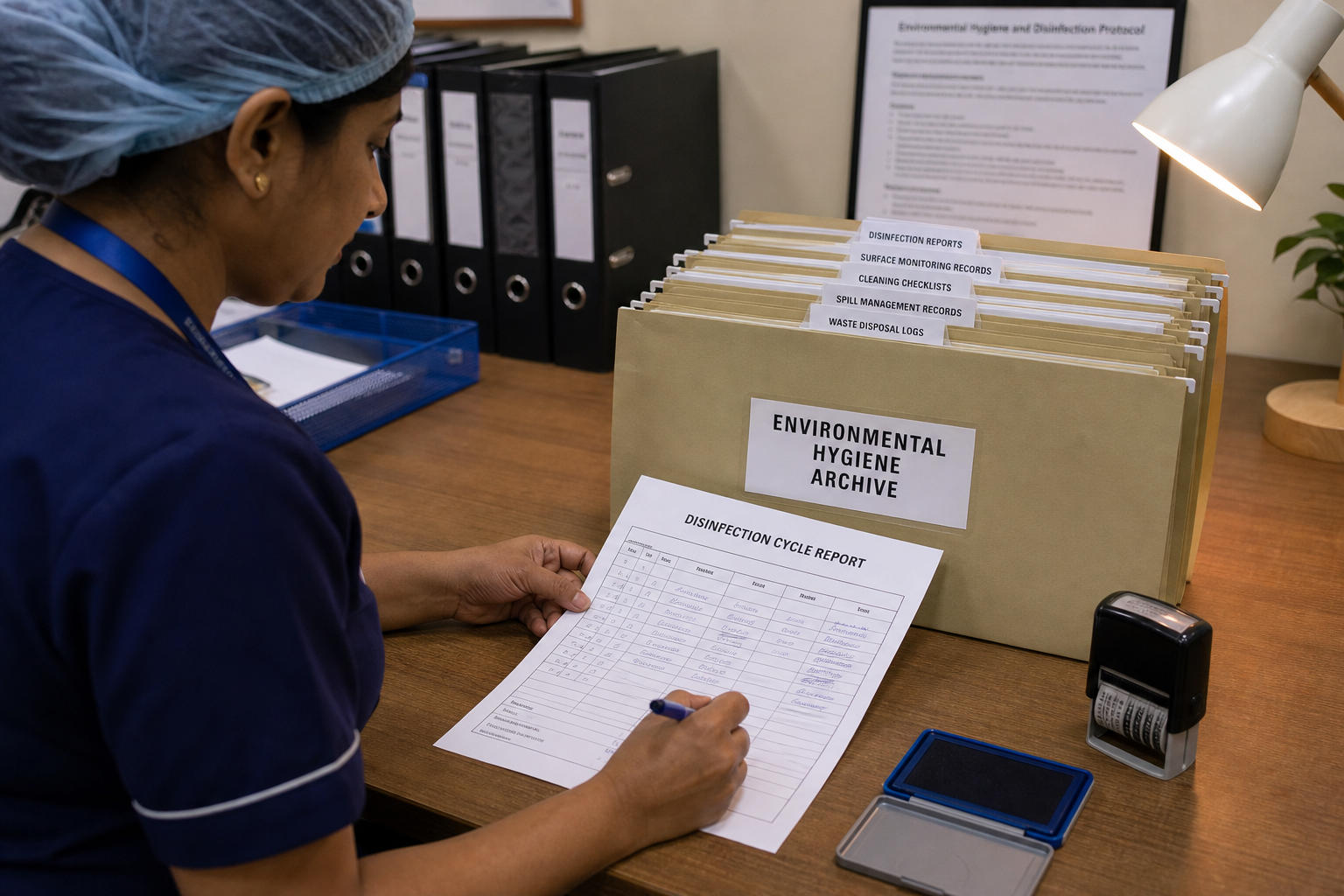
Every completed Spotbot cycle can produce a structured report: room identification, start and end times, coverage information, UV-C dose indicators, and duration. That record helps hospitals demonstrate environmental hygiene discipline during internal reviews and external assessments.
Close the loop with signed review and archive: machine log + SOP linkage + accountable attestation. Use reports alongside your existing SOPs—Spotbot supports your programme; it does not replace NABH or JCI pathways.
NABH, JCI, and hospital practice at a glance
How Spotbot supports documentation and protocol-driven secondary disinfection—without claiming to certify accreditation.
NABH document support
Cycle reports—room ID, timestamps, coverage, UV-C dose indicators, and duration—help strengthen environmental hygiene documentation for CQI and audits.
JCI-aligned architecture
Protocol-driven, repeatable terminal secondary disinfection reduces shift-to-shift variability as an adjunct to hospital cleaning SOPs.
Signed archive discipline
Machine logs become accreditation-usable evidence when hospitals govern review, signature, retention, and retrieval during assessment week.
Ready to map Spotbot to your accreditation workflow?
Book a demo to walk through room eligibility, cycle reporting, and how documentation can support your IPC programme for NABH and JCI conversations.

Email Address: info@spotless.ai
Phone Number: +44 7765 221740
Address: E - Innovation Centre Telford Innovation Campus, Priorslee, Telford, Shropshire, England, TF2 9FT