
UV-C lamp lifespan degradation is the failure mode almost nobody puts on the brochure: a disinfection robot can look and sound the same while germicidal output quietly falls. Visible glow is not a dose meter. Without logged hours, cleaning, and measured verification, programmes assume delivery they have not confirmed.
This post stays with lamp physics and maintenance discipline—not proprietary wattage lists or price tables. For how dose language works, see UV-C log reduction explained. For why lamps belong in a service bundle, see robotics as a service hospital. For putting verification into the evidence chain, see digital disinfection records.
UV-C Lamp Lifespan Degradation: Lamps Age Invisibly
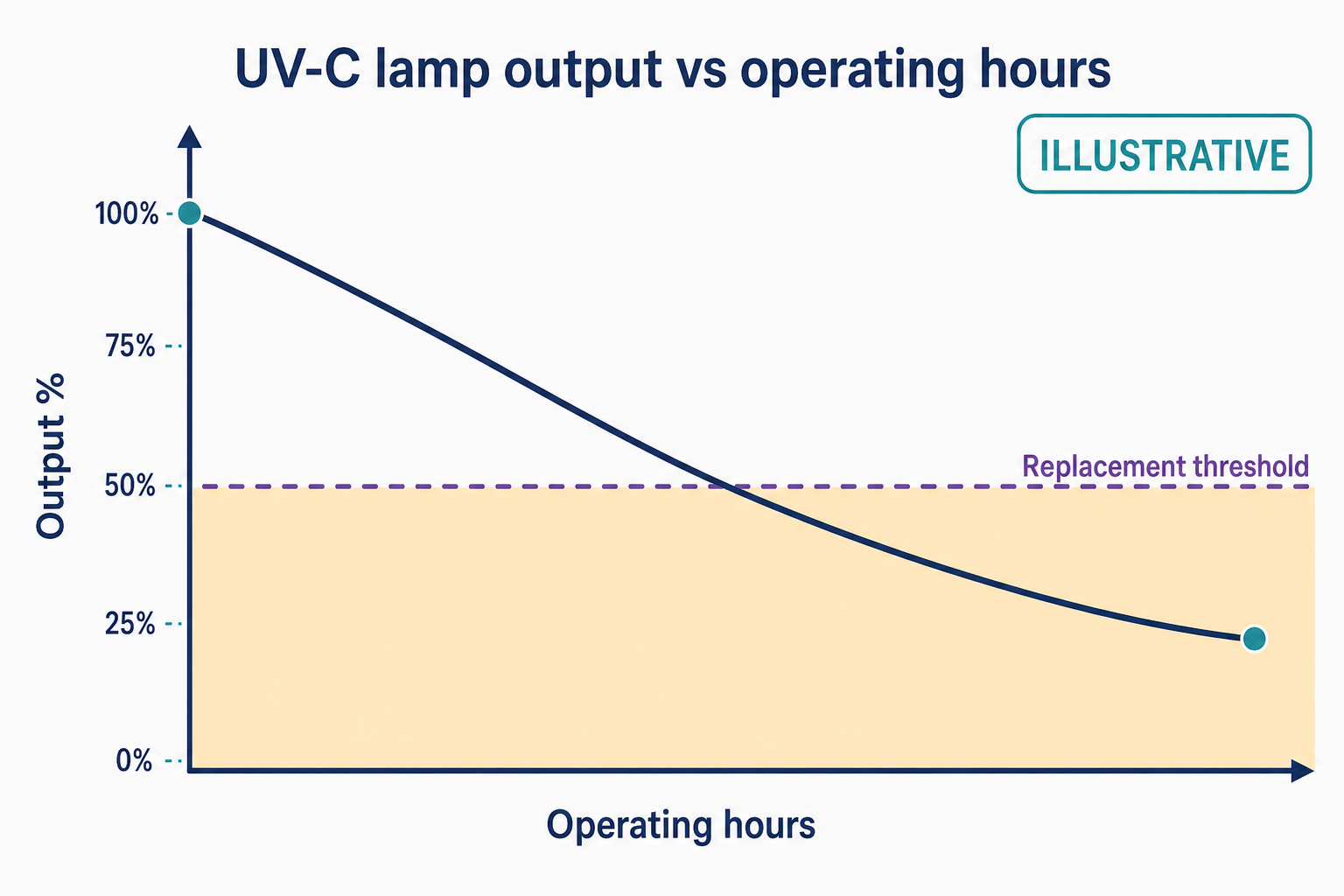
Low-pressure mercury and similar germicidal sources lose UV output over operating hours even when the tube still lights. Manufacturers publish a useful life—often expressed as a stated fraction of initial output after a stated hour range. Those numbers belong to the lamp datasheet, not to a universal hospital average.
The chart below is illustrative: output declines; a replacement threshold line marks when programmes should stop trusting the old cycle recipe without measurement. Exact hour marks vary by lamp family—follow manufacturer-specified useful life, not a marketing curve copied as fact.
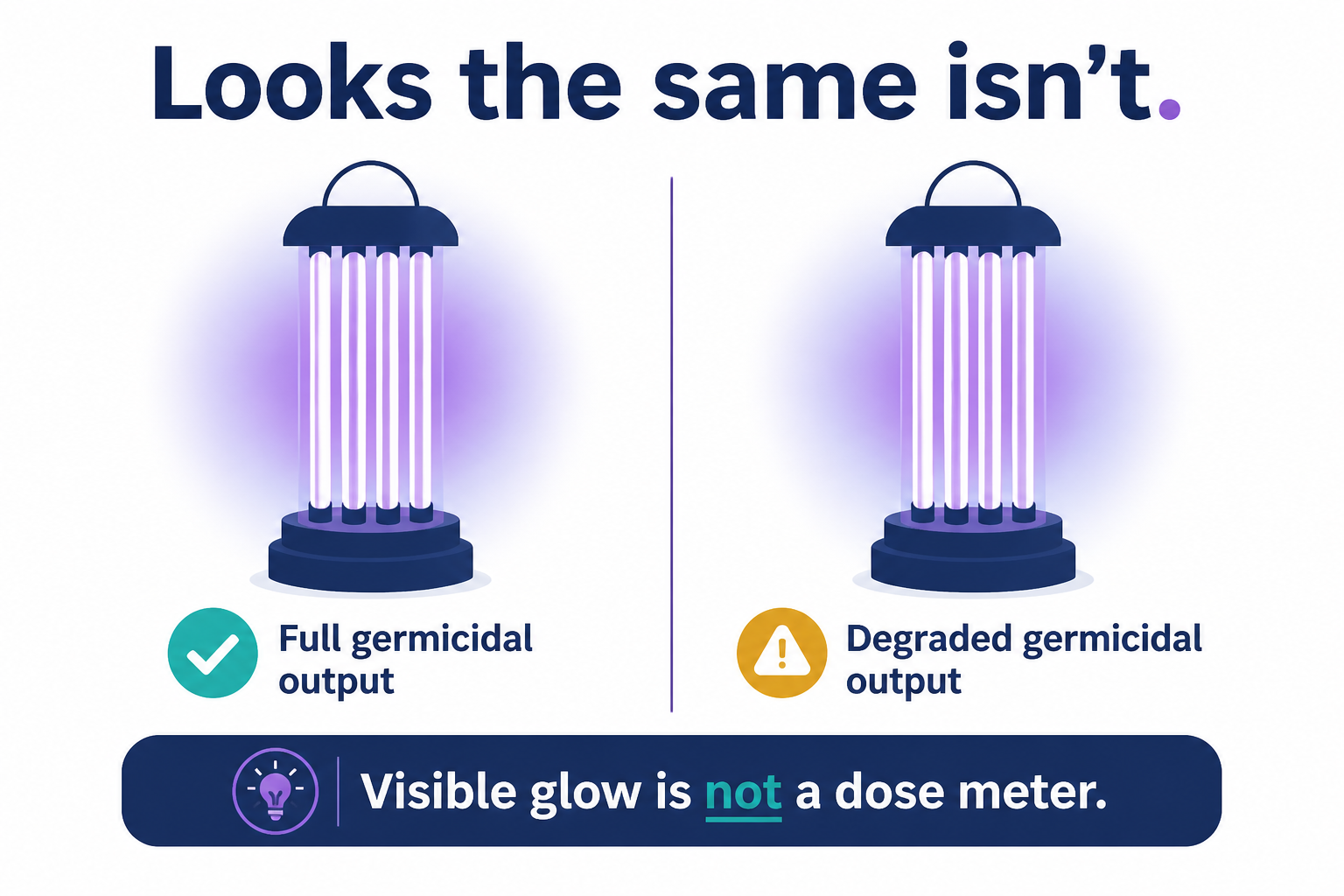
Operators still see a blue-violet glow long after germicidal intensity has sagged. That is why eyeballing a lit tube is a poor maintenance test.
Why This Matters More for UV-C Than for Lighting
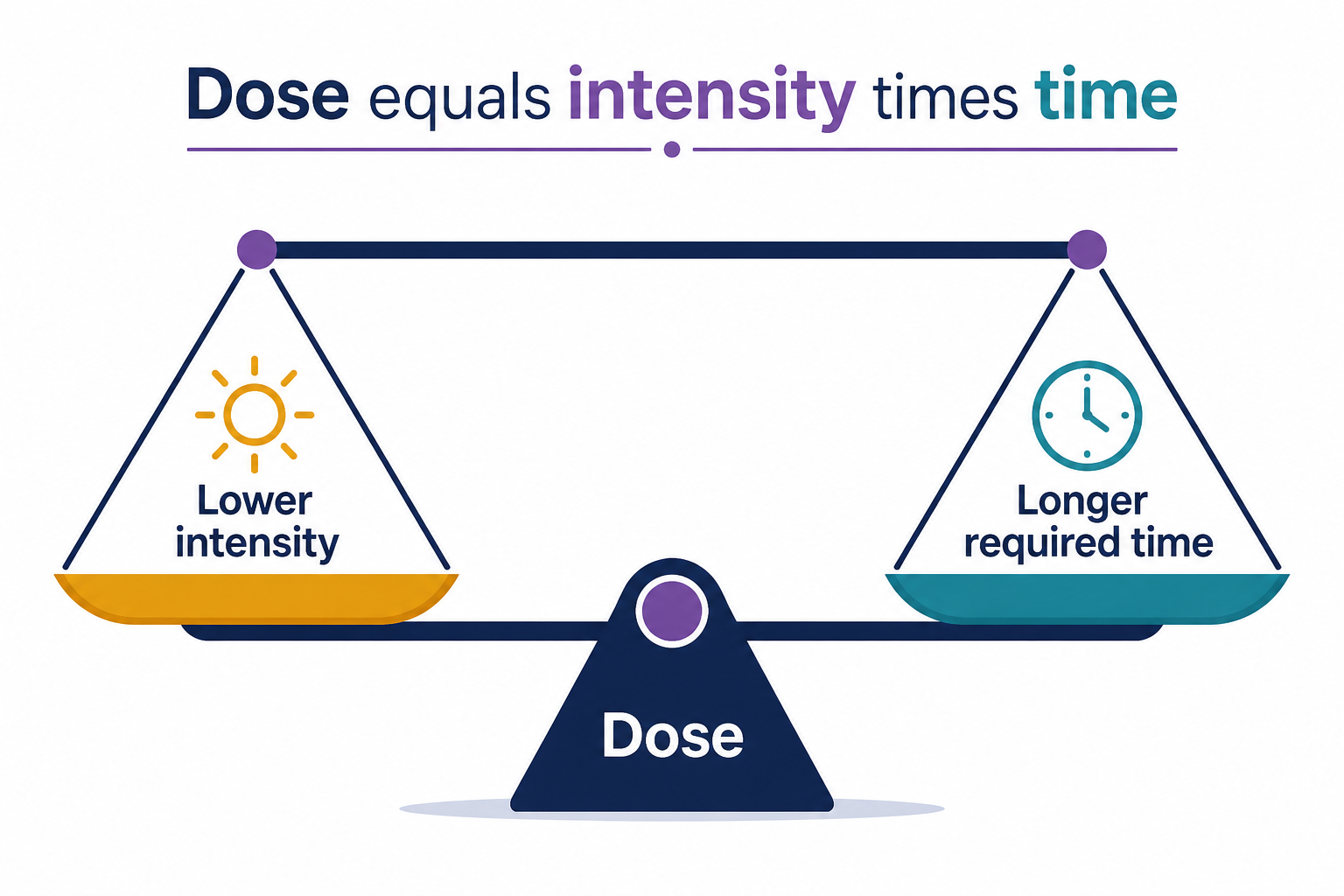
Room lighting tolerates gradual dimming. Germicidal work does not. Dose is intensity × time. A quiet 25–30% intensity loss either silently lengthens the exposure you need or silently under-doses if you keep the old cycle clock.
That is the seesaw: lower intensity demands longer time to hold the same target dose. Programmes that never re-measure output keep running yesterday’s minutes against today’s weaker lamps. UV-C remains an adjunct after manual cleaning in unoccupied rooms; degraded lamps do not change that hierarchy—they only weaken the adjunct step.
IPC and biomedical should agree in writing whether cycle recipes auto-extend when measured intensity falls, or whether lamps are replaced before recipes change. Silence on that policy is how under-dosing becomes institutional habit.
Compounding Factors Beyond Hour Count
Hour meters alone understate risk. Dust and film on the lamp envelope cut output that cleaning can restore. Power-supply drift changes drive conditions. Ambient temperature can shift output for some lamp types. Two robots with identical hour logs can therefore deliver different intensity if one was cleaned and verified and the other was not.
Facility teams should treat cleaning as a dose-protection task, not cosmetic housekeeping. A film that looks trivial in white light can matter at germicidal wavelengths. The same visit that wipes envelopes should log the clean and—on the verification cadence—re-check output so you know the wipe actually recovered intensity.
The split illustration is the buyer’s reminder: identical glow, unequal germicidal performance. Photometric photobiology standards such as IEC 62471 sit in the broader UV safety conversation; maintenance still starts with measuring the source you actually run.
UV Lamp Replacement Schedule: What Proper Maintenance Looks Like
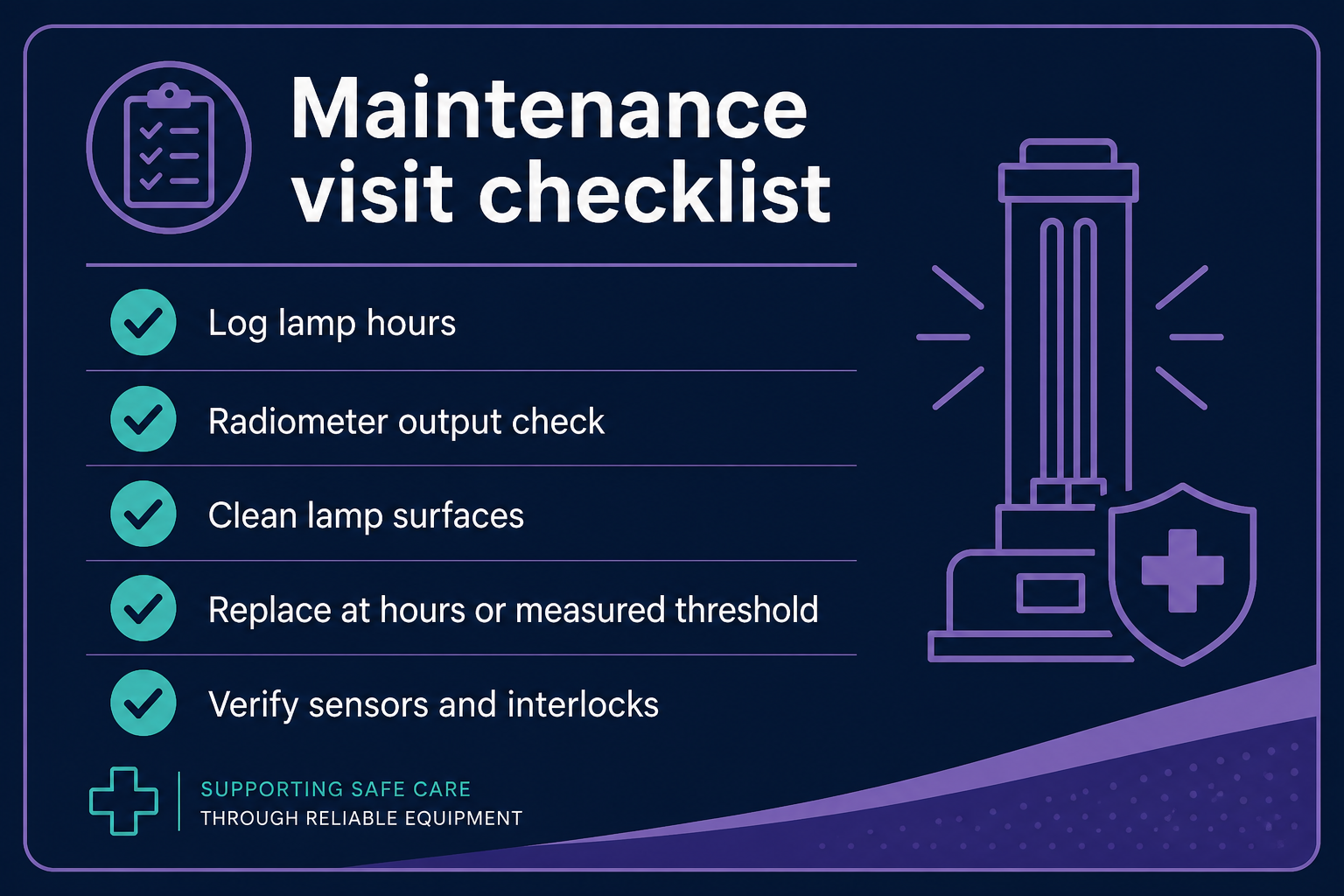
A serious UV lamp replacement schedule is not “change when it fails to light.” It is a visit discipline:
- Logged lamp hours per lamp or bank, not tribal memory
- Periodic measured-output verification with a radiometer—not an eyeball
- Envelope cleaning on a defined interval
- Replacement at manufacturer hours or measured threshold, whichever comes first
- Sensor and interlock checks in the same visit so safety and dose controls both stay honest
Buyers comparing AMC inclusions should ask which of these lines are actually performed—and how results are filed—not only whether a contract exists. RaaS bundles that include lamp care exist because this work is real; ownership without it is a deferred risk, not a saving.
The Record Connection: Hours and Verification Belong With Cycles
When an assessor asks “how do you know the intended dose was available?”, cycle start/stop alone is incomplete. Lamp-hour logs and radiometer verification results belong in the same audit trail as room-level cycle records. That is the digital hygiene-record logic applied to the source, not only to the room event. The same paperwork discipline matters when UV-C appears as a modest line in a pharma contamination control strategy—see UV-C pharmaceutical clean room practice.
Versioned thresholds matter here too: when you change a replacement rule or measured minimum, keep the history of what applied when. Otherwise digital systems quietly rewrite the context of older cycles.
Biomedical and quality should agree who owns the file—hours in a CMMS only, verification in a paper binder, cycles in a robot cloud—and then close the gaps. Fragmented evidence is how programmes look complete until the survey question arrives.
Honest Caveat: Without Measurement You Are Assuming Dose
The honest caveat
Any UV-C programme without measured output verification is assuming, not knowing, its delivered dose—including ours if maintenance lapses. That is precisely why scheduled care is non-optional. Glow, completed-cycle flags, and calendar age are not substitutes for a radiometer and an honest hour log.
Key Takeaways
- Germicidal output declines over hours while visible glow can persist.
- Dose = intensity × time; quieter lamps under-dose or need longer cycles.
- Dust, power drift, and temperature compound hour-based ageing.
- Replace on manufacturer hours or measured threshold—whichever first—with radiometer checks.
- File lamp hours and verification with cycle records; without measurement you are assuming dose.
Frequently Asked Questions
Can we wait until the lamp will not strike?
No. Failure to light is far past the point where germicidal output has usually already fallen. Use hours and measured thresholds.
Is a phone photo of the blue glow enough?
No. Visible emission is not a calibrated radiometer reading at the wavelengths that matter for inactivation.
Do we need the vendor’s proprietary wattage list to start?
You need the lamp family’s manufacturer useful-life guidance, hour logging, and a verification method. Proprietary robot wattage tables are not required to understand the failure mode.
Where should verification results live?
With the same quality evidence chain as cycle records—searchable, attributable, and retained for the assessor’s question.
Where does SpotlessAI fit?
SpotlessAI treats scheduled care and measured verification as part of a trustworthy adjunct UV-C programme after manual cleaning. Talk to our team about how lamp-hour and verification evidence fit your maintenance and quality system—without a price list in this article.
Conclusion
UV-C lamp lifespan degradation is quiet, visible-glow-compatible, and operationally expensive if ignored. Dose physics does not care that the robot still looks busy.
Build a UV lamp replacement schedule around hours, cleaning, radiometers, and records. Assume nothing you have not measured.
When biomedical and quality want a calm walkthrough of that discipline, the SpotlessAI team is ready.