
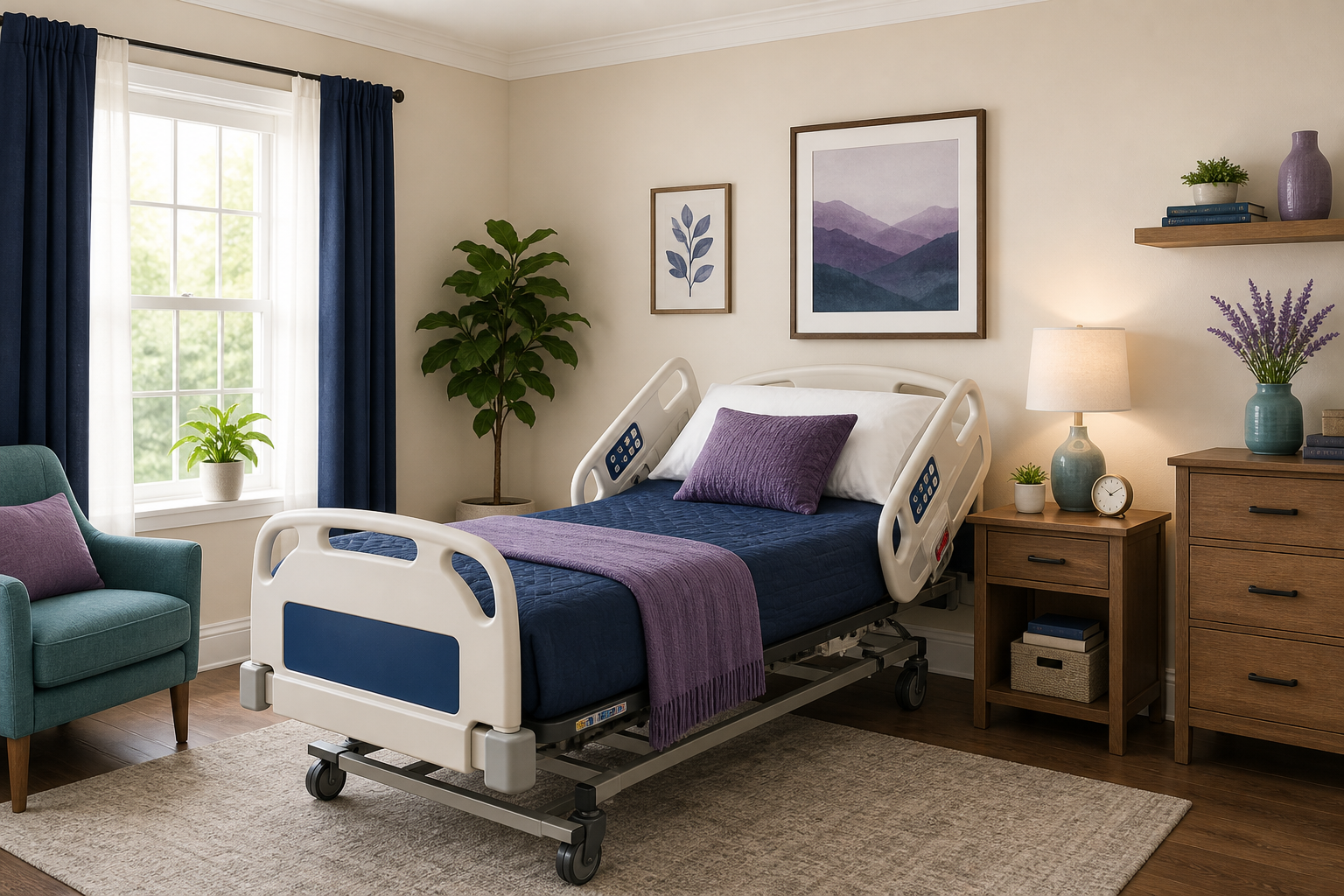
UV-C disinfection home healthcare is emerging because the patient moved—and the vulnerability moved with them. Home ICU setups, post-surgical recovery, dialysis support, and palliative or oncology care now unfold in bedrooms that were never designed as wards. Environmental hygiene must follow that shift without pretending a residence is a hospital EVS department.
This post defines the category on honest terms: vacated-room adjunct cycles after basic domestic cleaning, safety doctrine identical to hospital exclusion rules, and triage that says no when a home cannot be vacated. For the safety hub, see UV-C safety occupied room. For why surface hygiene still matters in India’s infection burden, see hospital acquired infections India. For what UV-C cannot do, see UV-C disinfection limitations.
UV-C Disinfection Home Healthcare: The Hospital Is Coming Home
Across India, more high-dependency care is delivered at home: monitored beds, wound care, device support, and end-of-life programmes that keep patients out of crowded wards when clinically appropriate. The environment of care changed; the patient’s susceptibility to environmental pathogens did not vanish at the hospital gate.
Homecare company leadership and care coordinators therefore inherit a question hospitals already ask: what environmental layer sits after cleaning, in a space that can be enclosed and vacated? Public-health framing for infection prevention in home settings—such as materials summarised by the CDC—still starts with hand hygiene, PPE, and cleaning. UV-C, if used, is only a secondary adjunct.
Families often assume “hospital bed at home” automatically imports hospital hygiene systems. It does not. Without deliberate design, the bedroom inherits the patient’s risk profile and the household’s ordinary cleaning habits—an asymmetric match that deserves a named category response.
Infection Prevention Homecare Patients: Who Needs This Most
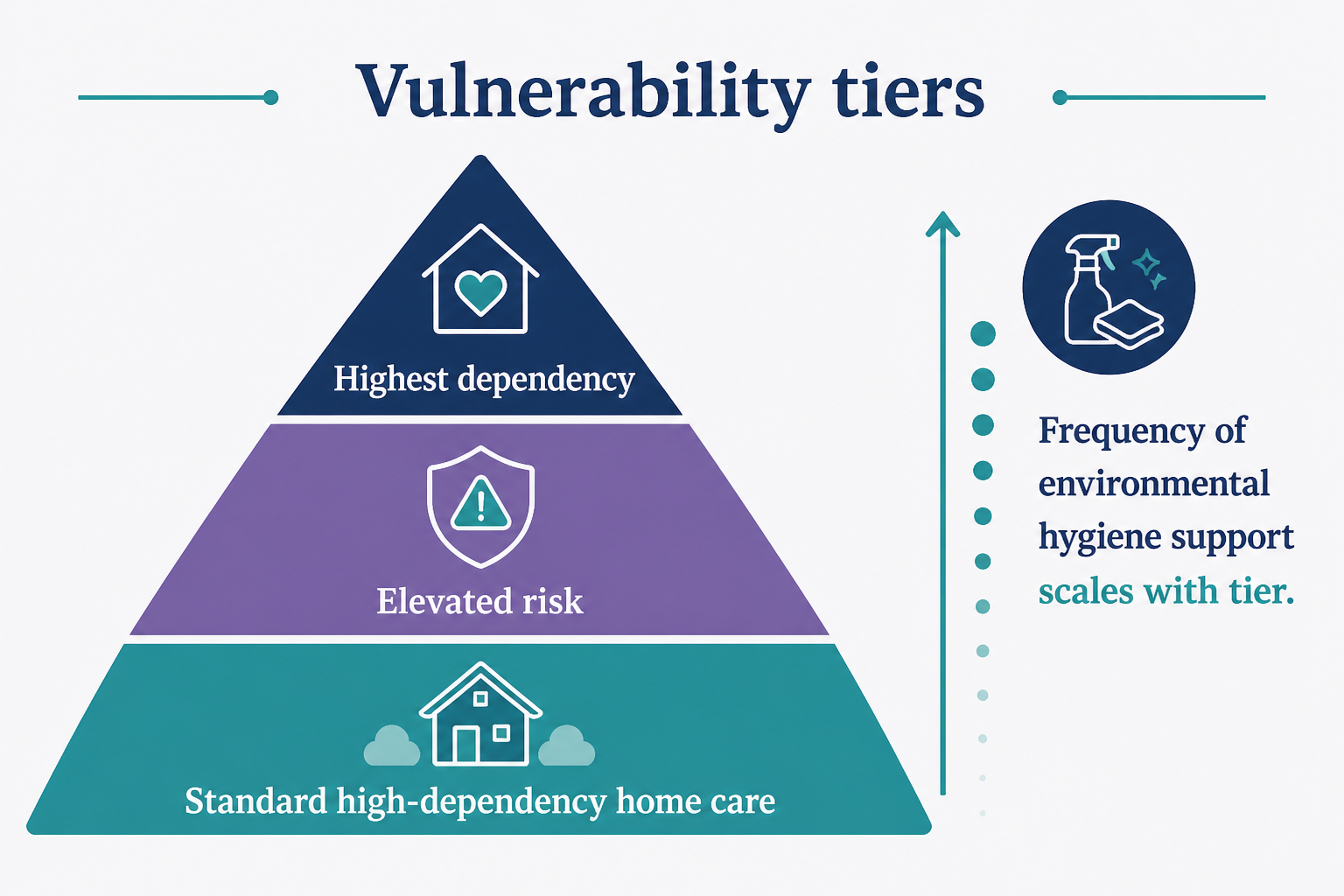
Not every home visit needs the same environmental intensity. Frame need as vulnerability tiers—frequency of any adjunct environmental step should scale with risk, not with a flat calendar:
- Highest dependency — ventilated or tracheostomy patients; complex device care
- Elevated risk — immunocompromised patients (chemotherapy, transplant pathways); active wound-care regimens
- Standard high-dependency — elderly patients with device dependencies and limited mobility
Infection prevention for homecare patients is still mostly people and process: hand hygiene, caregiver technique, and cleaning of high-touch surfaces. Adjunct UV-C only enters after those basics, and only when the room can be emptied and enclosed.
Why Homes Are Hygienically Harder Than Hospitals
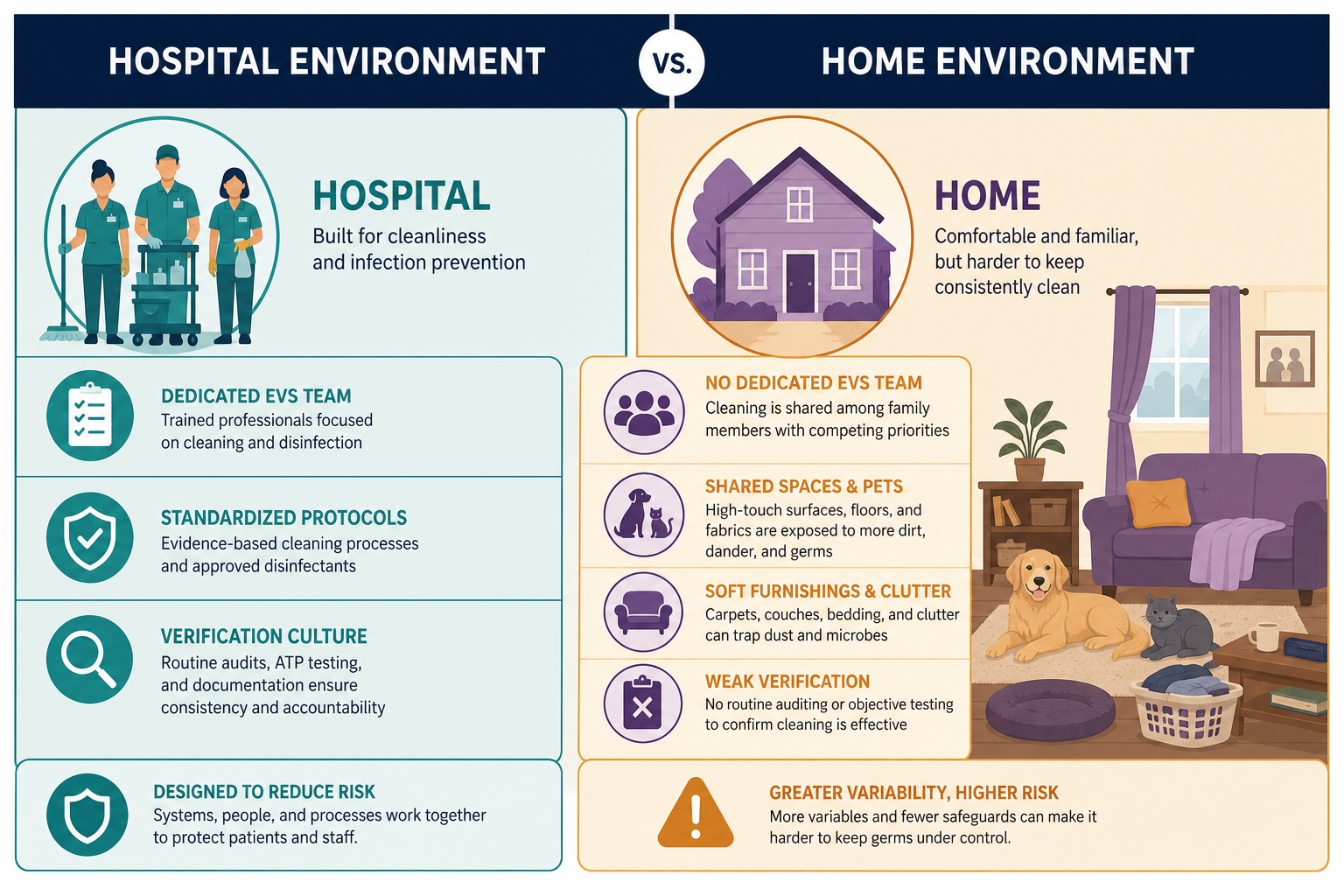
Hospitals have EVS teams, protocols, and at least some verification culture. Homes usually do not. Shared family spaces, pets, soft furnishings, and open kitchens create a messier microbial and optical environment. There is rarely a checklist culture that survives a busy weekday.
That honesty is the starting point, not a sales objection. If basic domestic cleaning is weak, no adjunct cycle fixes soil, dust, or debris—UV-C inactivates microorganisms on exposed surfaces; it does not clean. Soft furnishings and clutter also create shadows; limitations that matter in hospitals matter more when the “ward” is a lived-in bedroom.
Care coordinators should document those constraints before promising an adjunct layer. A tidy evacuated bedroom with a closable door is a different candidate from a single-room dwelling where the family has nowhere else to wait.
What a Home UV-C Service Visit Looks Like
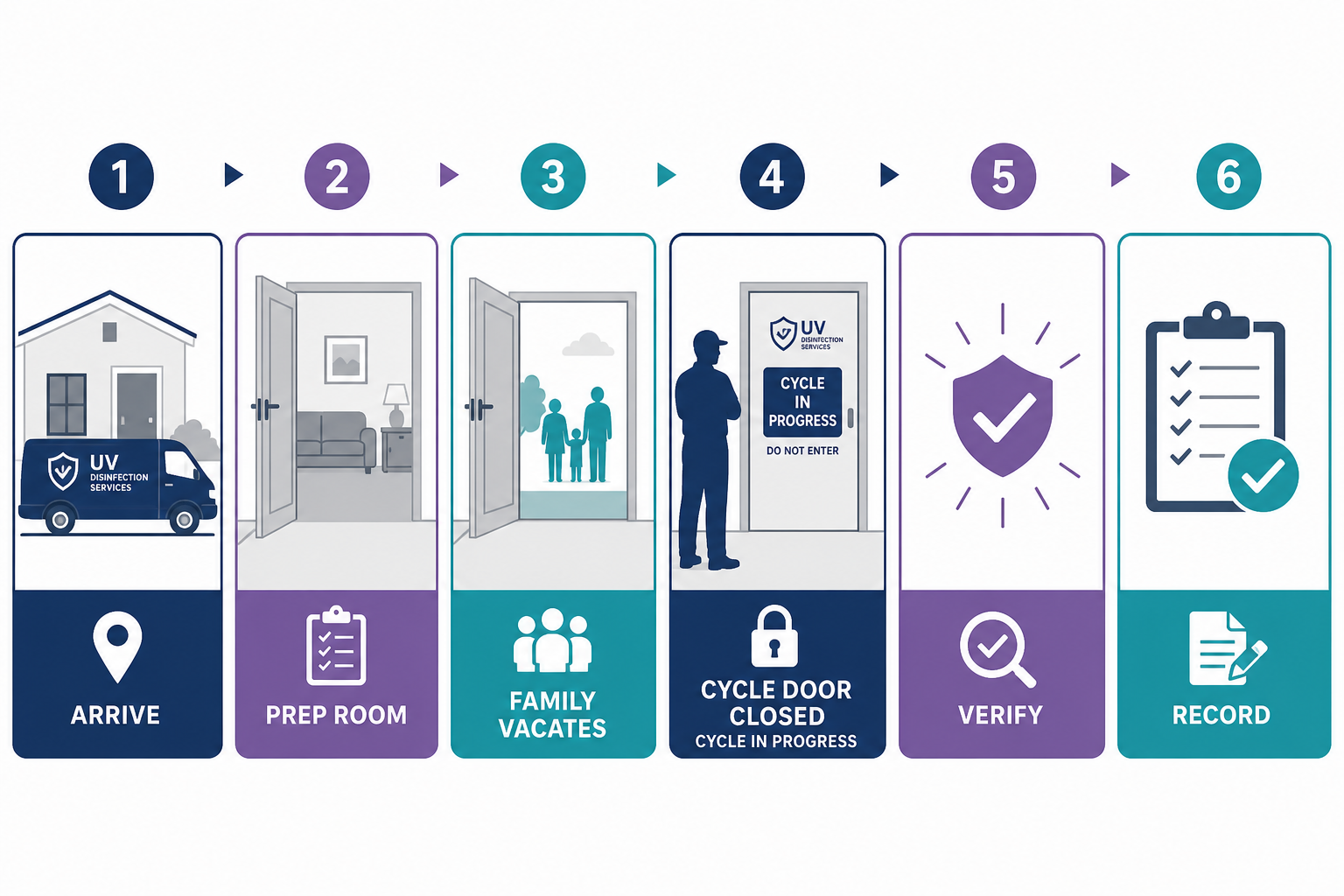
Treat the patient’s room as the enclosed unit—solid walls, closable door—not the whole flat as one optical space. A disciplined visit roughly follows:
- Arrive and confirm clinical readiness with the care team
- Prep: basic cleaning first; reduce obvious clutter where safe
- Family, caregivers, and pets vacate the room
- Close the door; post clear “cycle in progress” signage; operator remains outside
- Run the vacated-room cycle
- Verify completion; record the event for the care file
Frequency should track vulnerability tier and clinical judgement—not a one-size schedule. This article does not publish service tiers or per-cycle commercial terms; those belong in a conversation with your own utilisation and triage rules.
Safety at Home Doubles Down
The doctrine does not soften because the building is residential: UV-C never runs in occupied spaces. A curtain is not a barrier. Children, elderly relatives, and pets raise the cost of a mistake. If UV can travel or reflect into a hallway where someone waits, that hallway is in play—same optical logic as open wards.
Homecare programmes that cannot enforce exclusion should not run cycles. Safety is not a brochure footnote; it is the gate that decides whether this category applies to a given address.
Train caregivers the same way hospitals train staff: the boring sequence wins. Empty room, closed door, posted signage, operator outside, then cycle. Anything sold as “stand back while it runs” is a red flag in a residence just as it is on a ward.
Honest Caveat: Unclean Homes and Rooms That Cannot Vacate
The honest caveat
A UV-C cycle cannot compensate for an unclean home environment. The service works only as a layer over basic domestic cleaning. Some homes—especially single-room dwellings that cannot be vacated, or layouts that cannot enclose a treated volume—are not suitable candidates. Honest triage says no more often than sales culture likes. That restraint is how the category earns trust.
Key Takeaways
- High-dependency care is moving home; environmental vulnerability moves with the patient.
- Match adjunct intensity to vulnerability tiers—not a flat schedule.
- Homes lack EVS; cleaning and shadow/clutter limits still bind.
- Visits follow vacate → enclose → sign → cycle → record, with the operator outside.
- Refuse sites that cannot vacate or clean first—UV-C is an adjunct, never a substitute for cleaning or exclusion.
Frequently Asked Questions
Can we run UV-C while the patient rests behind a curtain?
No. Occupied spaces are off-limits. Curtains are not barriers. The patient, family, and pets must leave an enclosed room with a closed door.
Does UV-C replace domestic cleaning?
No. It does not remove soil, dust, or debris. Clean first; adjunct second.
Is every home a candidate?
No. If the treated volume cannot be vacated and enclosed, triage should decline rather than improvise.
How often should visits occur?
Scale to clinical vulnerability and care-team judgement. This article does not publish fixed commercial schedules or service tiers.
Where does SpotlessAI fit?
SpotlessAI discusses vacated-room adjunct UV-C programmes with organisations exploring hospital-grade environmental layers in high-dependency residences. Talk to our team about triage and safety fit—not a partner list or price sheet in this post.
Conclusion
UV-C disinfection home healthcare is a legitimate emerging category when it inherits hospital honesty: clean first, vacate and enclose, measure what you claim, and refuse unsuitable homes.
Define the space before competitors fill it with gadget claims. The winning programmes will sound careful, not loud.
When homecare leaders want a calm category conversation, the SpotlessAI team is ready.